Seasonal allergies vs. cold vs. sinus infection: How to tell the difference
Medically reviewed by Dr. Betsy Koickel, MD on June 2nd, 2026.
Sinus infections, colds, and allergies share many overlapping symptoms, including a runny nose, sinus pressure, fatigue, and congestion, but there are some important differences between them. Understanding and identifying which condition you are struggling with can help you find the most effective treatment.
The knowledgeable providers offer quick, professional care and provide an accurate diagnosis for both conditions.
What is a sinus infection (sinusitis)?
A sinus infection is inflammation of the sinuses caused by bacterial, viral, or fungal infections. Certain factors may increase your risk of sinus infections, including the common cold, nasal polyps, or asthma.
Common symptoms of sinus infections
Common symptoms of sinus infection may include:
- Cough, particularly at night
- Facial pain and pressure
- Dental pain
- Fatigue
- Fever (in some cases)
- Headache
- Loss of smell or taste
- Nasal congestion
When symptoms of a sinus infection last more than 10 days, worsen, or are accompanied by a fever, this may signal a need for professional care.
What are allergies?
Allergies are not caused by an infection; they occur when the immune system overreacts to harmless substances, releasing substances called histamines. Triggers can include pollen, pet dander, or dust mites.
Common symptoms of allergies
Symptoms of allergies may include:
- Cough due to irritation
- Itchy eyes, nose, or throat
- Postnasal drip
- Runny nose (clear mucus)
- Sneezing
- Watery eyes
Allergies may be considered severe or persistent when symptoms last for weeks, interfere with daily activities, or continue despite the use of over-the-counter medications. When allergy medications no longer provide relief, further evaluation is important to determine whether another condition, such as a sinus infection, is causing the symptoms.
What is a cold?
A cold is a common viral infection that can infect the upper respiratory system, causing symptoms like a runny nose, cough, or sneezing. It is typically mild and resolves on its own after a few days.
Common symptoms of cold
Cold symptoms may include:
- Cough
- Fatigue
- Low-grade fever (usually under 101°F or 38.3°C)
- Mild headache
- Runny or stuffy nose
- Sneezing
- Sore throat
- Watery eyes
Most cold symptoms are mild, resolve in a few days, and can be treated at home. If symptoms become more severe, last longer than 10 days, or if you spike a fever after symptoms improve and then worsen, this could be a sign of another infection. See a healthcare provider immediately if you are experiencing facial pressure, mucus, shortness of breath, high fever, or chest pain.
Sinus infection vs. allergies vs cold: Key differences
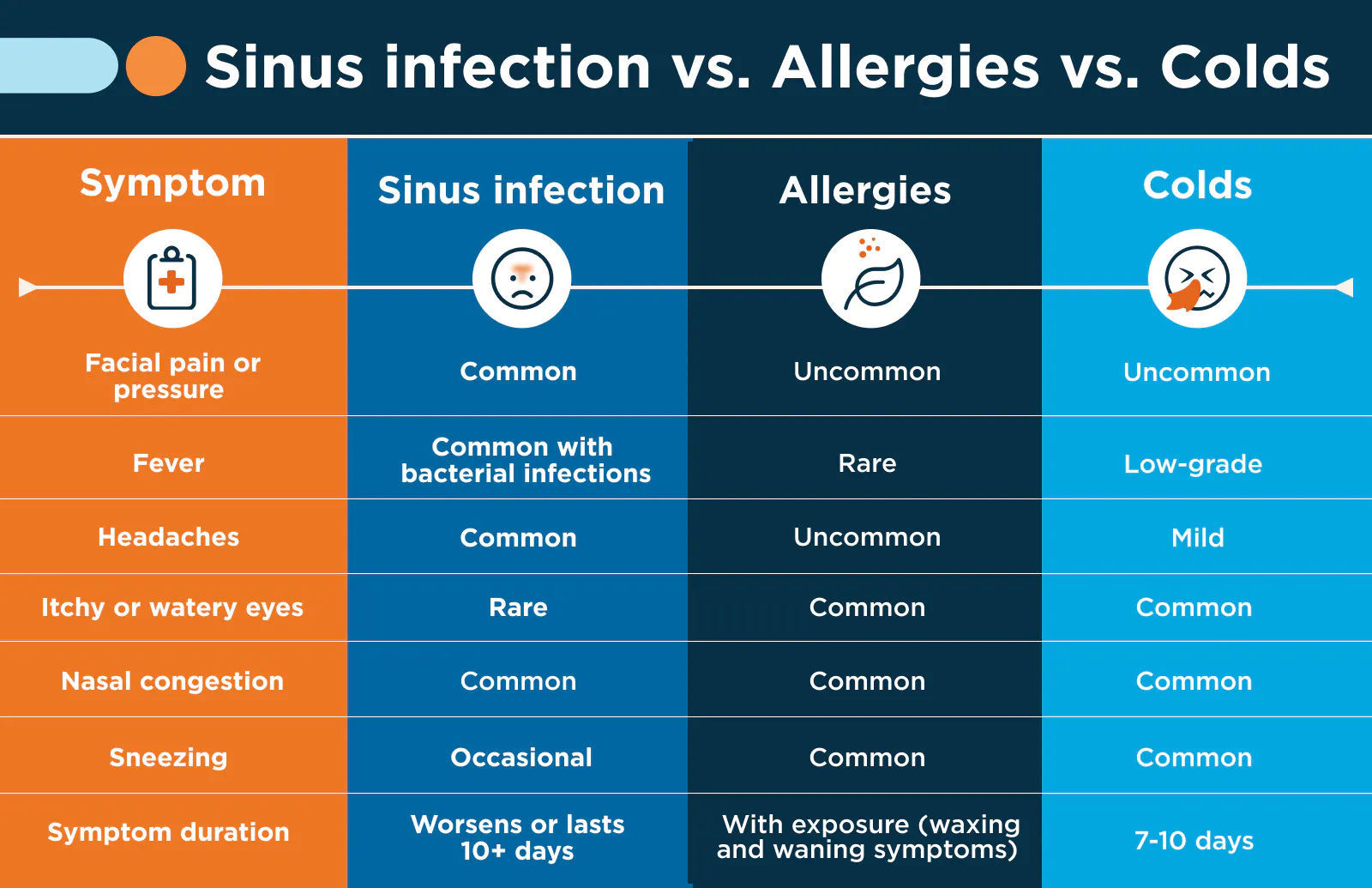
Here is a quick breakdown of the main symptoms of sinus infections vs allergies vs. cold.
Treatment options for sinus infections
Treatment options for sinus infections will depend on the cause. Many sinus infections improve with at-home care such as rest, fluids, saline nasal rinses, and over-the-counter pain relievers. If symptoms are severe or get worse, a healthcare provider may prescribe antibiotics or other medications.
Treatment options for allergies
Allergy treatment focuses on decreasing the exposure to triggers and managing symptoms. Common options include antihistamines, nasal sprays, decongestants, and saline rinses. For severe allergies, a healthcare provider may recommend prescription medications or additional evaluation of symptoms.
Treatment options for colds
The common cold doesn’t have a specific treatment, and most people are able to recover on their own without medical care. Rest, fluids, saline nasal sprays, and over-the-counter medications like decongestants or pain relievers can help manage cold symptoms.
When to visit urgent care
Urgent care can help manage allergies, sinus infections, and colds. A good time to visit urgent care is if your symptoms are severe, worsening, lasting longer than expected, or if you’re unsure what they mean and would prefer a provider to evaluate them and guide your next steps. Urgent care is also appropriate if symptoms interfere with daily activities or if you are unsure whether your symptoms are caused by allergies, the common cold, or a sinus infection.
Caring providers are here to help you get the right diagnosis and treatment. To get started, find an urgent care center nearest you and walk in or save your spot online.
FAQs
Here are some frequently asked questions about the symptoms of seasonal allergies vs cold vs sinus infection.
How can I tell if I have a sinus infection or just allergies?
Sinus infections often cause mucus, facial pain, headache, and sometimes fever, while allergies typically cause clear mucus, sneezing, and itchy or watery eyes. If you are unsure, seeing a healthcare provider can help confirm the cause.
How do I tell if my symptoms are from seasonal allergies, a cold, or a sinus infection?
Seasonal allergies usually cause sneezing, itchy or watery eyes, and symptoms only last while you are exposed to allergens. A cold often comes on gradually, may include a sore throat, cough, or mild fever, and typically improves within 7–10 days. A sinus infection is more likely if symptoms last longer than 10 days or include severe facial pain, pressure, and thick nasal discharge.
Can a sinus infection turn into allergies?
No. Sinus infections and allergies are different conditions. However, untreated allergies can increase the risk of developing a sinus infection.
Do I need antibiotics for a sinus infection?
Not always. Many sinus infections are viral and improve on their own; you only need antibiotics if you have a bacterial infection.
What allergy medications are available?
Providers can recommend or prescribe antihistamines, nasal steroid sprays, decongestants, and other medications based on your symptoms and history.
Can I treat a sinus infection or allergies at home?
Mild symptoms may improve with rest, fluids, saline nasal rinses, and over-the-counter medications. If symptoms get worse, you might need to seek medical care.
References:
- https://www.webmd.com/allergies/sinusitis-or-allergies


