As Urgent Care expands across Houston, more families turn to it for fast, convenient care
The Urgent Care Pulse Check Survey – Houston Report

Houston residents are seeing more urgent care centers open closer to home, and many families are making them a regular part of their healthcare routine. According to the 2025 Urgent Care Pulse Check Survey commissioned by Memorial Hermann-GoHealth Urgent Care, 39% of Houston residents say they are more likely to use urgent care this year because new centers have opened nearby (vs. 28% nationally).
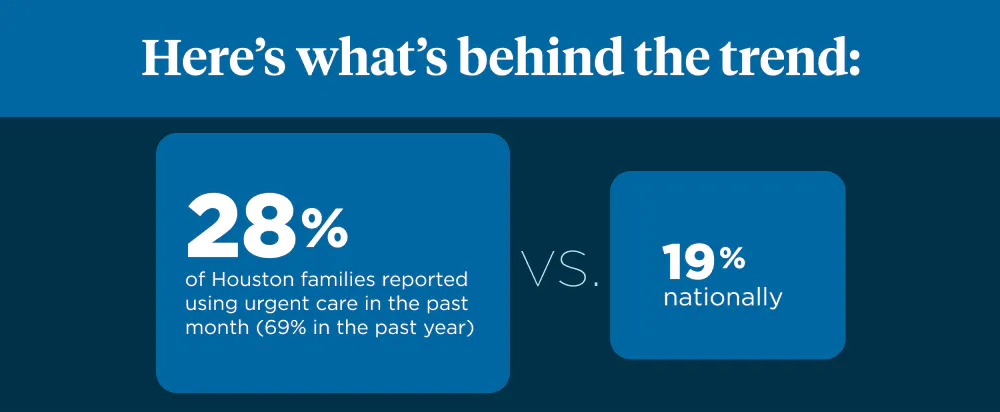
This expanded access reflects how residents are using urgent care: At the time of the survey, 28% of Houston households report visiting urgent care in the past month, compared to 19% nationally, and 69% say at least one person in their household visited urgent care in the past year.
The findings suggest that for many Houstonians, urgent care is no longer just a backup option; it’s becoming a go-to option for treating common illnesses, minor injuries, seasonal conditions, and other non-emergency health concerns.
Family needs, access and affordability drive Houston’s healthcare preferences
For many Houston households, urgent care plays an important role in managing family health. Of those whose family had ever visited urgent care, 29% say a child under 18 is typically the patient when visiting, highlighting urgent care’s role in treating common childhood illnesses, injuries, and seasonal health concerns. 1
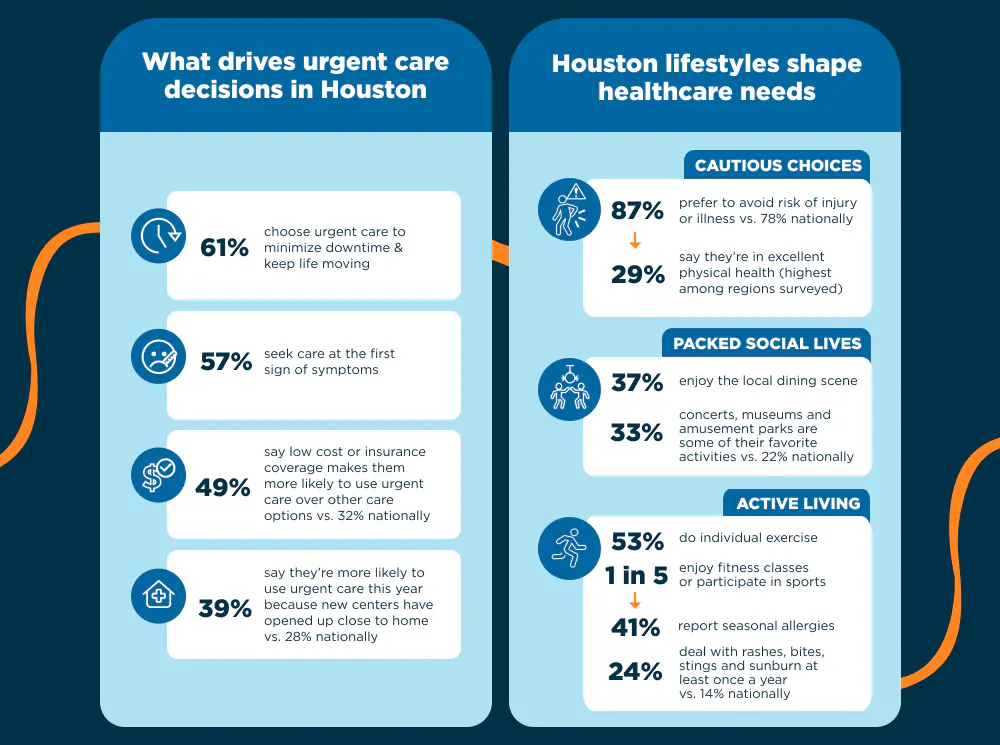
Access and convenience are the main reasons Houston residents turn to urgent care. 61% cite the ability to be seen quickly, 53% point to convenient locations, and 50% say evening and weekend hours influence their decision.
The rapid expansion of urgent care options across the region is also shaping behavior. 39% of residents say they are more likely to visit urgent care this year because new centers have opened close to home (vs. 28% nationally).
Affordability also factors into the decision, with nearly half (49%) of residents saying low cost or insurance coverage makes urgent care a preferred option over other healthcare settings (vs. 32% nationally).
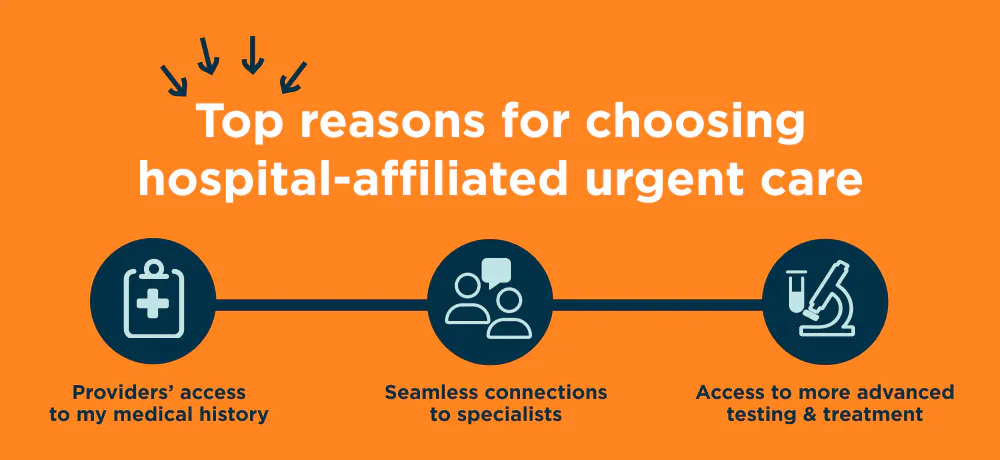
While convenience and access may drive the initial visit, many Houston residents also say that connection to a larger healthcare system matters when deciding where to go. Residents report greater confidence in hospital-affiliated urgent care centers, citing factors such as:
- Seamless connection to specialists if additional care is needed
- Providers’ access to medical records for continuity of care
- Access to more advanced testing and treatments compared with standalone clinics
How lifestyles influence healthcare needs in Houston
A prevention-focused approach to health
Houston residents tend to take a proactive approach to protecting their health. More than half (57%) of residents say they seek care at the first sign of illness rather than delaying treatment, and 87% say they prefer to avoid unnecessary risk of injury or illness (vs. 78% nationally).
Reflecting that proactive mindset, 29% of Houstonians rate their physical condition as excellent.
Active lifestyles shape everyday healthcare needs
Many Houston residents report staying active, with 53% participating in individual exercise and about 1 in 5 (21%) attending fitness classes or playing sports. These activities can also lead to seasonal and environmental health concerns, such as allergies and skin issues that many Houstonians experience each year.
- 41% experience seasonal allergies
- 24% deal with skin issues such as rashes, bites, stings, or sunburn at least once per year (vs. 14% nationally)
Life in a busy, social city
Beyond exercise and outdoor activity, Houston’s vibrant social and cultural scene also shapes how residents spend their time.
- 16% enjoy nightlife
- 37% enjoy the local dining scene
- 33% say visiting attractions such as concerts, museums, or amusement parks is a favorite pastime (vs. 22% nationally)
With residents juggling work, family commitments, and social events, quick and easy access to healthcare is especially important when unexpected illnesses or minor injuries arise.
As Houston continues to grow, convenient access to trusted healthcare options remains essential. By offering accessible urgent care locations connected to a larger health system, Memorial Hermann-GoHealth Urgent Care helps support the region’s proactive approach to health by providing nearby care for common illnesses, injuries, and non-emergency health needs.
Data source & methods:
The Urgent Care Pulse Check Survey was commissioned by Memorial Hermann-GoHealth Urgent Care and conducted by Wakefield Research among 2,000 nationally representative U.S. adults and 100 interviews in the Houston DMA, between August 29th and September 8th, 2025, using an email invitation and an online survey. The data has been weighted.
Results of any sample are subject to sampling variation. The magnitude of the variation is measurable and is affected by the number of interviews and the level of the percentages expressing the results. For the interviews conducted in this particular study, the chances are 95 in 100 that a survey result does not vary, plus or minus, by more than 2.2 percentage points for the national sample, and 9.8 percentage points for the Houston DMA, from the result that would be obtained if interviews had been conducted with all persons in the universe represented by the sample.
Infographic: